


|Message from the Chairman
|Officers
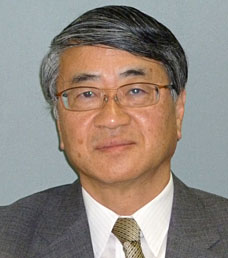
Kazuo Chihara
Chairman of the Board of Directors

I was elected chairman of the board of directors at the Japan Neuroendocrine Society meeting held in June 2001. After the general meeting in October, I was inaugurated as the chairman, succeeding the former chairman, Juichi Saito. I am very honored, but at the same time, feel a deep responsibility.
This society has a 35-year history and is now entering the mature stage from the initial stage. I will briefly talk about the history of this society since young researchers may not know it. The predecessor of the Japan Neuroendocrine Society is the Neuroendocrine Symposium. The first meeting of this symposium was held on August 8-9, 1967, with Shinji Ito as the President in the conference room of the Faculty of Medicine, Hokkaido University, Sapporo. The symposium was irregularly held until the 7th meeting but began to be regularly held after the 8th meeting in 1981 when the symposium was formally recognized as a Neuroendocrine Section (President, Akira Kumagai) of the Japan Endocrinological Society. The new rules of the society established this year became effective on June 5, 1981. A Neuroendocrine Section meeting was annually held in autumn until the 21st meeting. I did not miss a single meeting from the 6th Neuroendocrine Symposium (President, Junzo Kato, Japan Institute for Urban Policy). Among these meetings, the 10th Neuroendocrine Sectional Meeting was particularly impressive to me. Though Prof. Masazumi Kawakami, a world-famous pioneer of neuroendocrine research (Department of Physiology II, Yokohama City University) was elected as the president, he suddenly passed away due to disease soon after the election. I worried about the meeting, but the staff members at this department with Fukiko Kimura as the chairman of the executive committee fully prepared for the meeting, and a wonderful meeting was held in a moving atmosphere with a display of the photograph of the deceased Prof. Masazumi Kawakami. In 1984, the next year, the "Kawakami Prize" was established to encourage neuroendocrine research.
In 1995, there were 410 general members and 149 councilors (total, 559). As with other sections, the Neuroendocrine Section changed its name to the Japan Neuroendocrine Society for further development while remaining its characteristics as a section of the Japan Endocrinological Society. From the 22nd meeting in 1995 to 28th meeting last year, a scientific meeting of the Japan Neuroendocrine Society was annually held in autumn. In 1999, the board of directors/chairman system was introduced instead of the secretary system that had supported this society for a long period. With this change, some new attempts were initiated.
During the period of the secretary system, all secretaries were recommended by the president. In the board of directors/chairman system, the directors and chairman have been elected in principle. In addition, to encourage research by young researchers, a young researcher encouragement prize was established in 2001. Newsletters have been also published to inform people of neuroendocrinology and the activities of this society. If you compare the articles of this society partly revised on October 29, 1999 with the previous articles, you may notice that the present articles include the production of international researchers in addition to the holding of scientific meetings and the promotion of international exchange. On August 31-September 4, 2002, the 5th International Neuroendocrine Congress will be held in Bristol, England. What ratings will be given to Japanese neuroendocrine researchers? Very original works that attain to the global standard rating are required.
As the chairman of the board of directors, I established some targets. To plan and manage scientific meetings useful for the members and enrich the commendation system, newsletters, and the home page, the financial basis should be established first. To say nothing of the accurate collection of membership fees, I will make efforts to increase supporting members and collect contributions. In addition, since neuroendocrinology is an interdisciplinary unique scientific field that allows exchange of researchers in a wide range from basic scientists in medicine, science, pharmacology, and agriculture to clinicians, I would like to shorten the distances to associated societies and research meetings for close information exchange. After such efforts, the acquisition of Grants-in-Aids for Scientific Research on Priority Areas by mutual cooperation may approach to realization.
I would like to ask you for great support and cooperation.


Copyright (C) 2006 Japan Neuroendocrine Society. All Rights Reserved.